Skip to content
Getaway

Wildlife watching in Svalbard

Svalbard·Norway

Wildlife watching in Svalbard

Photo: AWeith · Wikimedia · CC BY-SA 4.0

Epic7 days on the groundGuide required

Why go

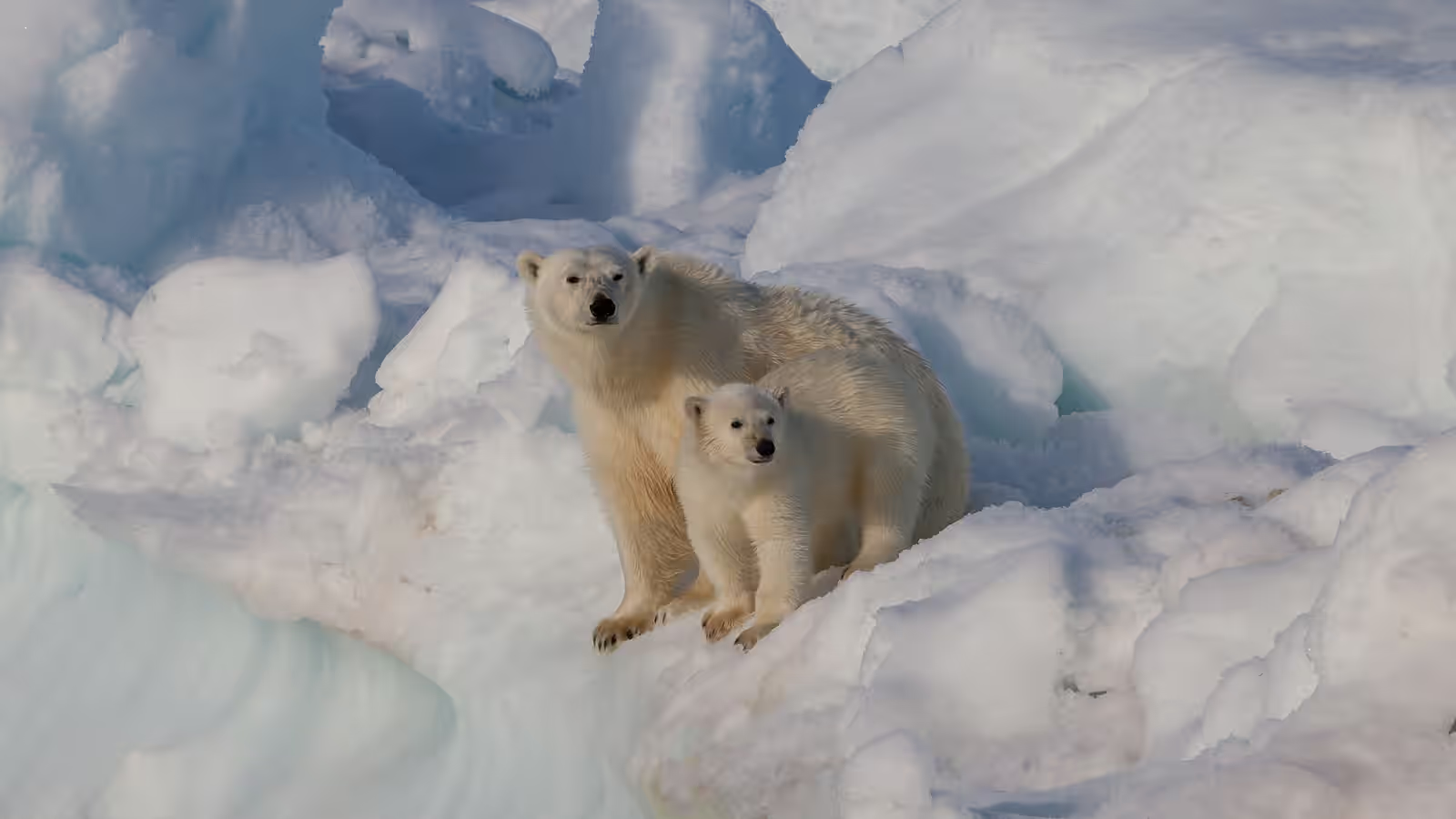
Svalbard, a frozen archipelago halfway between mainland Norway and the North Pole, is one of the few places on earth where you can reasonably hope to see a wild polar bear — and to do it from the deck of a small expedition ship, drifting past glaciers and pack ice at 78 degrees north, is the trip of a lifetime.

Over a week-long voyage you cruise fjords and ice edges searching for bears on the hunt, hauled-out walrus, Arctic foxes, reindeer, beluga whales and vast seabird cliffs, going ashore by Zodiac where it is safe. The scenery alone — blue glacier fronts, floating ice, endless polar daylight — is staggering.

It is expensive and reached only by expedition, but for wildlife watchers it is the ultimate: raw, remote Arctic nature at a scale and purity almost nowhere else can match.
When

In season: Jun–Aug

Who it’s for

Skill
Beginner
Effort
Easy
Suitable from
12+ · Teen+
Crowds
Quiet
Cost
$$$$$

Wildlife watching specifics

Species
Polar bear, Walrus, Arctic fox, Svalbard reindeer, Beluga whale, Seabirds
Best time of day
Day
Guide required
Yes

What to expect

A ship-based expedition rather than a land trip: days spent scanning the coast and ice from deck, cruising among glaciers and Zodiac-landing on tundra shores when conditions and bear safety allow.

Wildlife sightings are never guaranteed and often distant — this is patient watching with binoculars, not a zoo — but a good voyage typically turns up polar bears, walrus, seabirds and reindeer.

The Arctic sets the terms: cold, wind, fog and ice can reshape any itinerary, and landings depend on weather and the ever-present need to guard against bears, so armed guides accompany every shore excursion. The 24-hour summer daylight means sightings can come at any hour.

It is physically undemanding but requires flexibility, warm clothing and a tolerance for long stretches of watching and waiting.

How to start

The voyage season is the polar summer, roughly June to August, when the pack ice has loosened enough to sail the fjords and coasts.

Book a berth on a small expedition ship well ahead through a reputable polar operator — smaller vessels reach more places and land more often than big cruise ships. Fly to Longyearbyen to join the ship.

You need no special skills, but bring serious cold-weather layers, waterproofs, binoculars and a decent camera lens for distant wildlife. Everything ashore is guided and bear-protected, as required by Svalbard's strict rules; follow the crew's briefings closely.

Accept that weather and ice dictate the route and that sightings are a matter of luck and patience — the wildness is the whole point, and it cannot be scheduled.

What else is in Svalbard

Wildlife watching elsewhere

New adventures, now and then

A short note when a batch of places worth the trip goes up. No spam, no operators, unsubscribe anytime.