Trail running- Length
- Flexible
- Kids
- Adults only
- Cost
- $$
- Permit
- Required
- Crowd
- Steady
Trail running in Iceland
Iceland
The Laugavegur Ultra Marathon — 55 km down Iceland's most famous trekking route in a day.
Iceland·Iceland
Photo: Bruce McAdam from Reykjavik, Iceland · Wikimedia · CC BY-SA 2.0
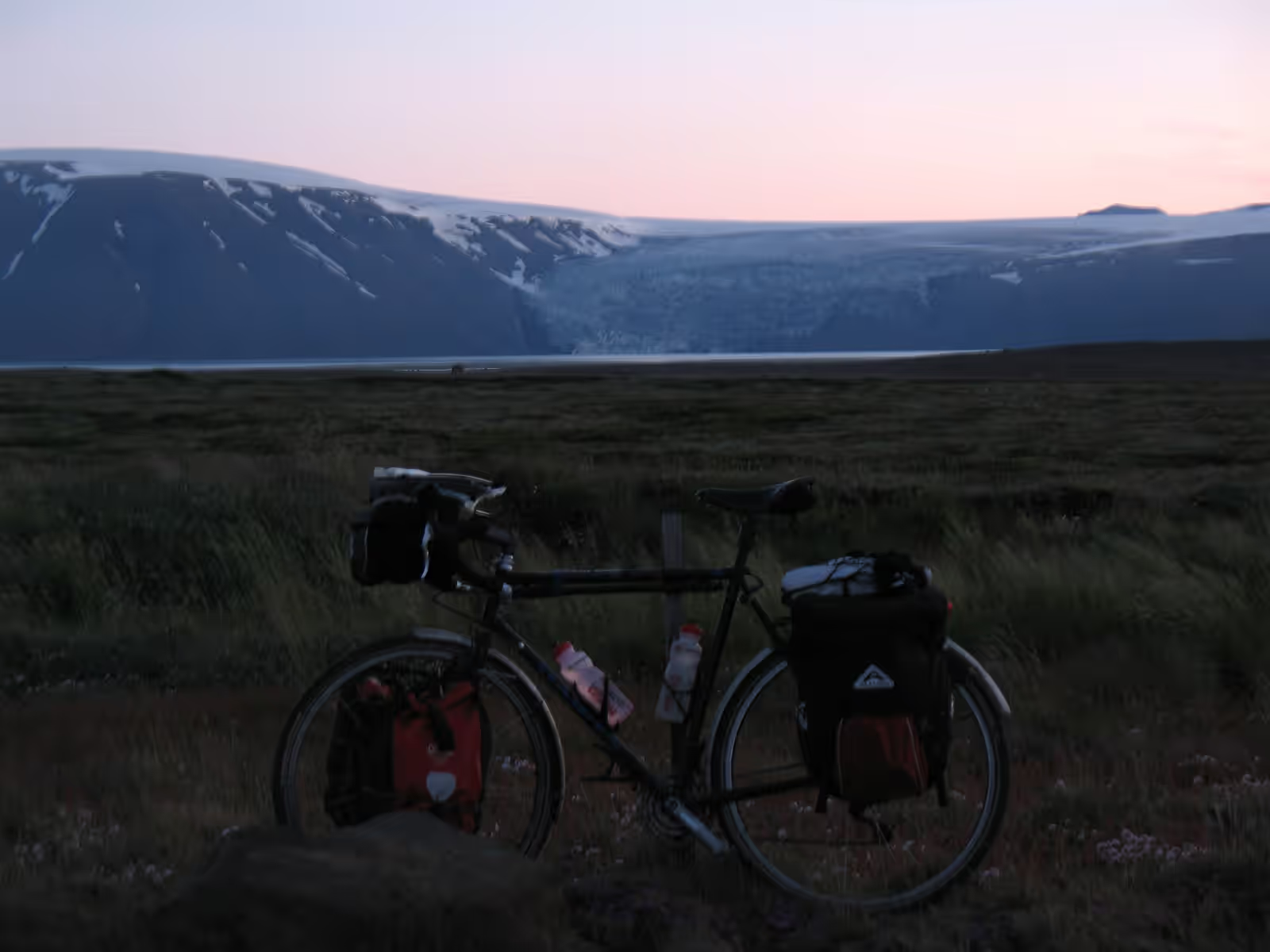
Route 1, the Ring Road, is the single paved highway that circles the whole of Iceland, and riding it is the classic way to see the country under your own power: 1,332 kilometres past glaciers, waterfalls, black beaches, lava fields, fjords and geothermal valleys, with the entire island's variety unrolling at bike pace.
Over a couple of weeks you link the south coast's famous sights, the eastern fjords, the north's whale towns and the volcanic west into one continuous loop, camping or staying in guesthouses along the way.
It's a demanding but hugely rewarding self-supported tour — exposed to Iceland's notorious wind and weather, but on good roads with regular-enough services and endless summer daylight.
For touring cyclists, circling an entire country of such staggering scenery, arriving back where you started, is a bucket-list journey and the definitive Icelandic bike trip.
In season: Jun–Sep
A long-distance road tour on the paved Ring Road, typically 10 to 16 days for the full loop, carrying your own kit and camping or using guesthouses.
The riding is rolling rather than mountainous, but the distances are big and Iceland's relentless wind is the defining challenge — a headwind can turn a flat day brutal, while a tailwind flies you along.
Weather is changeable and often cold and wet even in summer, so waterproofs and warm layers are essential. Traffic on Route 1 is light-to-moderate but includes fast vehicles and some tunnels and narrow bridges, so ride defensively.
Services (food, campsites, fuel) appear regularly but thin out in the east and highlands fringes. The reward is the whole country's scenery in one continuous ride, and the deep satisfaction of pedalling all the way around an island.
Ride in summer, roughly June to September, for open roads, services and long daylight; midsummer gives near-24-hour light. Allow two weeks or more for the full 1,332 km loop, or ride a section.
A touring or gravel bike with luggage works well; carry waterproofs, warm layers, tools, spares and camping gear (campsites and guesthouses are spaced along the route but book ahead in peak season).
Wind is the main adversary, so plan flexible days, consider riding anticlockwise to favour prevailing winds, and be ready to shelter. Ride defensively on Route 1 and check which tunnels allow bikes. Stock up on food where you can, as services thin in the remoter stretches.
No guide is needed for fit, self-reliant cyclists, but tell someone your plan. It's the definitive Icelandic cycling adventure.
Trail runningIceland
The Laugavegur Ultra Marathon — 55 km down Iceland's most famous trekking route in a day.
Iceland
Salmon on the Laxá by fly, or sea fishing out of the northern ports.
CyclingFrance
The Route des Grandes Alpes: 700 kilometres and sixteen passes from Lake Geneva to the sea.
CyclingAustria
The most ridden long-distance cycle route in Europe and the template every other one copies.
CyclingSpain
Sa Calobra and Cap de Formentor — the Serra de Tramuntana, the pro peloton's winter base.
A short note when a batch of places worth the trip goes up. No spam, no operators, unsubscribe anytime.